Your Cart is Empty

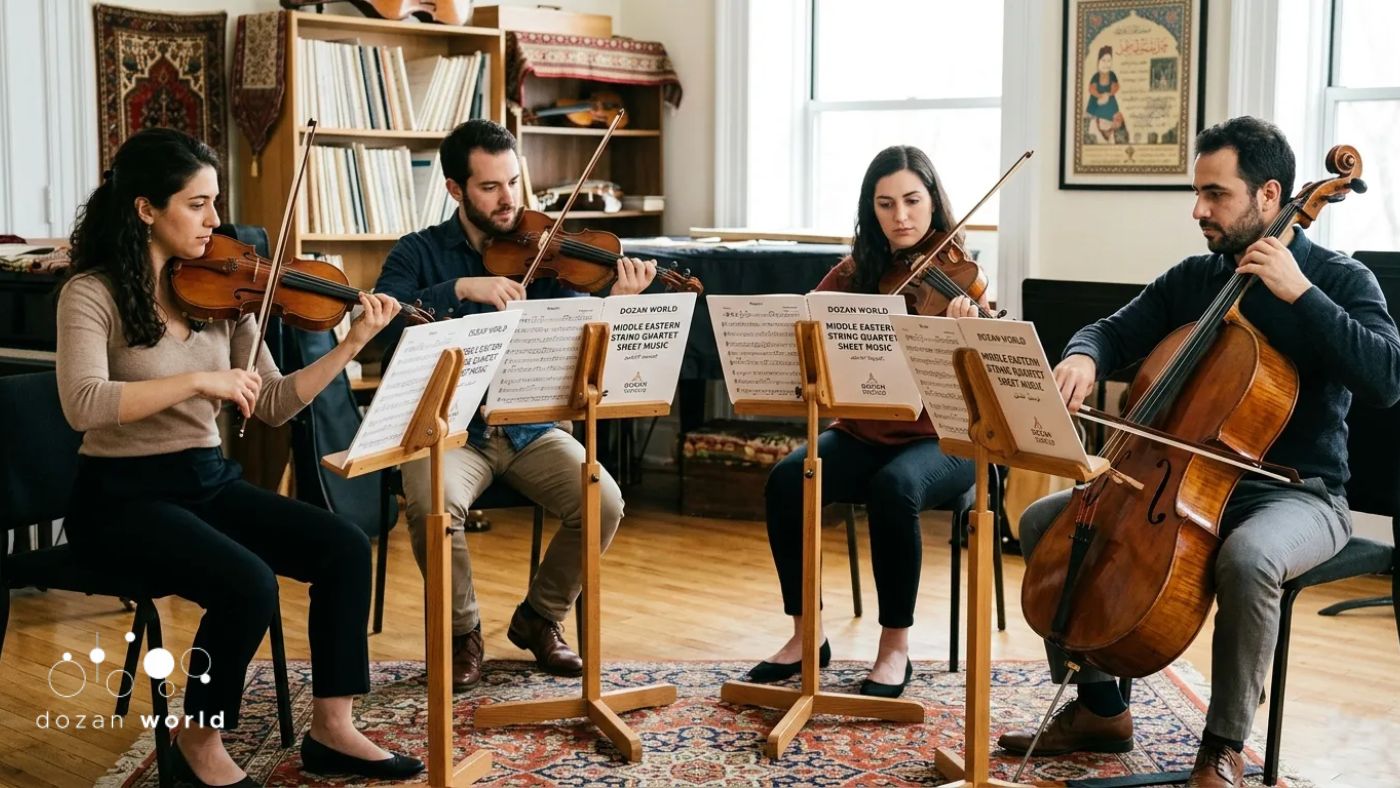
Are you part of a string quartet seeking to grow your musical horizons? If yes, Middle Eastern music offers you a world of opportunities. When you explore the depth and richness of Middle Eastern music, you will become part of a growing community that is finally falling in love with this region's musical traditions.
If you hear Arabic chamber music scores, the emotion and melodic sophistication will leave you impressed. Though the musical language may sound significantly different from the traditional Western canon, with practice and access to Arabic sheet music for string quartets, your group can easily expand its repertoire.
Before we look at where to find authentic Middle Eastern string quartet sheet music, we need to know the reasons behind the growing popularity of Arabic chamber music scores. Till a few decades ago, Arabic music was mostly restricted to the region or popular only among the diaspora in the West. But the times have changed, and we are seeing the growing popularity of the region's musical heritage worldwide, especially in the West.
Many Western chamber ensembles today are looking beyond classical selection in search of fresh artistic ideas. Arabic music offers exactly that. Its emphasis on melody, emotional storytelling, and modal expression provides a refreshing contrast to traditional Western chamber works.
Apart from helping you expand your artistic range, it also helps your ensemble engage audiences with distinctive musical experiences. With a fast-growing community of Middle Eastern expats in the West, you can make your performance broader and reach a larger audience. If you think of it purely from a musical perspective, Arabic sheet music for string quartets helps you explore new melodic structures and phrasing techniques and develop a deeper understanding of the musical traditions shaped by centuries of history and cultural exchange. As the region is one of the cradles of human civilization, its music encompasses more than two millennia of history and culture.
While playing for a diverse audience or catering to the Middle Eastern expat community may be one of your motivations. Still, there is another good reason to explore the musical heritage of this region, its uniqueness. The reliance on Maqam, or melodic modes, gives Arabic scores their unique place in the global musical landscape. Each maqam conveys specific emotions with its ornamentation and phrasing and a unique art of cultural storytelling.
As a group that has long explored mainstream Western music, you will notice that Middle Eastern string quartet sheet music is not always readily available. A casual search on the Internet may not deliver the same kind of results that you have been used to for years. It is important to note that many traditional works were transmitted orally rather than published and often remained confined within communities. In fact, up until recently, many arrangements remained unpublished, difficult to access, or lacked the cultural context necessary for an authentic performance.
We are all seeing the growing interest in music from this region. It is a big encouragement for platforms like ours to preserve and share these traditions through professionally prepared scores. We have carefully built a large library of authentic Middle Eastern sheet music, working closely with contemporary composers and also preserving classical works. Whether you are a professional performer, a chamber music enthusiast, or an educator, our collection can open the door to new artistic opportunities. From traditional melodies adapted for string ensembles to contemporary compositions inspired by Arabic musical traditions, the right Middle Eastern instrumental sheet music can help your quartet explore new sounds while developing a deeper appreciation for one of the world's richest musical heritages.
We aren't one of those platforms that transcribes melodies; we focus on preserving the music's authenticity and ensuring practical access. We have curated the collection with the global community of musicians, students, and music researchers in mind. When you explore our collection, you will find notated scores that respect the music's cultural roots while also being well suited to contemporary chamber music settings.
At Dozan World, we are spreading the rich musical legacy of Arabic music. Musicians in string quartets who want to branch out into new styles will find plenty to explore in our collection of Middle Eastern quartet arrangements. We've gathered a wide range of pieces so players can dive into these traditions without the usual struggle of hunting down reliable sheet music. Whether you are seeking new repertoire or building deeper cultural understanding for your research purposes, we have the resources you are looking for. By choosing authentic Middle Eastern instrumental sheet music, you can discover fresh musical perspectives. Visit Dozan World and start exploring one of the world's most enduring artistic traditions.
Why should Western string quartets explore Middle Eastern instrumental sheet music?
It makes you a more versatile group and lets you build a unique signature. Middle Eastern music is becoming popular in the West, driven by a fast-growing diaspora.
Can Western-trained musicians easily find Middle Eastern sheet music?
Yes, at Dozan World, we have built a large collection of Middle Eastern instrumental sheet music. Our curated list is easily accessible to Western-trained musicians. We have preserved the character of the original music while making it easy for ensembles like yours to practice and perform.
Are Arabic string quartet arrangements suitable for student ensembles?
Yes, and some arrangements are suitable for student ensembles. At Dozan World, we have such arrangements that you can explore.
How can a string quartet prepare for performing Arabic music authentically?
Start by downloading our Middle Eastern instrumental sheet music and listening to traditional performances. In doing so, you will begin to develop a strong understanding of the piece's cultural background and basic maqam concepts.
Can we use Arabic sheet music in multicultural concert programs?
Yes, these pieces are an excellent addition to concerts celebrating global music. In the diverse societies that we live in, your ensemble will expand its fan base.