Your Cart is Empty

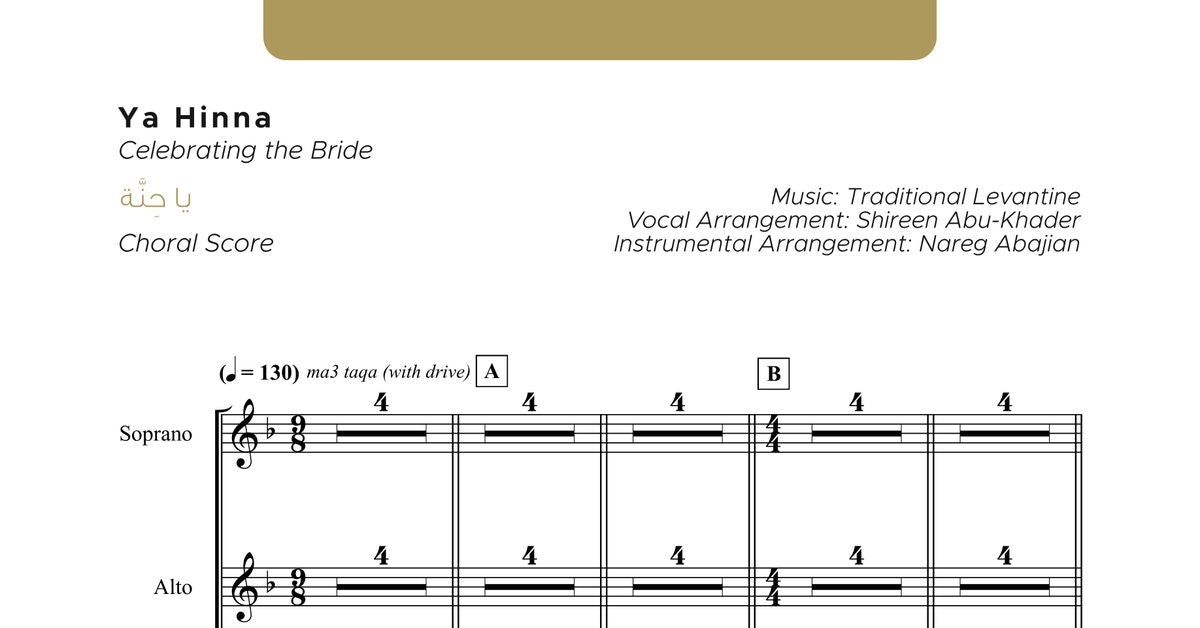
If you have ever listened to Arabic music and felt a deep emotional pull, you have likely experienced the power of the maqam system. For musicians, choral directors, and music educators working with Middle Eastern repertoire, a solid understanding of maqam is essential for daily practice and rehearsal preparation.
At Dozan World, our sheet music collection builds directly upon this traditional framework. Understanding how this system works helps clarify the reading, interpretation, and performance of Arabic sheet music.
The word "maqam" translates from its Arabic root as a place or position. Within music, a maqam represents much more than a simple sequence of notes. It serves as a complete melodic framework defined by specific pitches, characteristic intervals, melodic pathways, and a distinct emotional essence.
It occupies a space between a Western scale and a specific mood. While a standard major scale provides seven notes and a general tonal feeling, a maqam outlines exactly how to navigate those notes. It dictates which pitches receive emphasis, how musical phrases typically open and close, and the specific atmospheric weight the piece carries.
The Arabic tradition includes dozens of unique maqamat, each possessing its own personality. Maqam Rast feels grounded, noble, and stable. Maqam Hijaz conveys a deep longing often associated with traditional chanting. Maqam Bayati carries a profoundly moving quality, making it a cornerstone of classical Arabic and Levantine music.
A Western classical score allows you to identify the key signature, analyze the harmony, and anticipate phrase directions through familiar tonal patterns. In Arabic sheet music, the maqam performs this exact role.
Recognizing the mode of a piece offers several immediate benefits:
Musicians encountering Arabic sheet music for the first time often notice notation for quarter tones. These pitches rest directly between the standard half-steps found in Western equal temperament. Rather than being tuning mistakes, these intervals are essential building blocks for proper modal structure.
For instance, Maqam Bayati incorporates a lowered second degree that sits roughly a quarter tone below the Western minor second. Maqam Rast utilizes a subtle microtonal adjustment on the third degree that avoids sounding strictly major or minor. These nuanced intervals give the music its unmistakable character, and they receive clear marking in authentic sheet music to guide performers accurately.
Vocalists and string players can achieve these precise pitches through targeted ear training and careful listening. While fixed-pitch instruments like the piano require specific adaptations, recognizing the underlying framework allows any performer to make informed artistic decisions.
Several primary modes appear regularly throughout Middle Eastern music and choral arrangements:
Every arrangement in our library, including vocal solos, instrumental chamber music, and full SATB choral works, honors these modal foundations. Founder Shireen Abu Khader and team draw on deep roots in Levantine musical traditions to ensure that every publication maintains cultural integrity.
Our scores display notation tailored to the requirements of the mode. The phrasing suggestions, dynamic markings, and ornamentation stem directly from traditional practice rather than Western editorial habits.
For a choral conductor leading a Byzantine or Maronite liturgical piece, this clarity simplifies the rehearsal process. For instrumentalists studying specific repertoire like a Longa, understanding the mode allows you to move past the literal notes and capture the true spirit of the piece.
The most effective way to internalize these modes is through regular, active listening. Spending time with classical recordings helps your ear recognize the specific emotional textures and melodic movements characteristic of each framework.
Combining listening with notation accelerates this understanding. Observing how a composer develops themes, treats microtonal pitches, and transitions between modes provides a practical education that music theory books alone cannot replicate. Reviewing dedicated resources on notation practices and microtonal performance can offer deeper insight into how these structures translate to modern ensembles.
Whether you are a professional musician broadening your repertoire or an educator introducing an ensemble to Middle Eastern traditions, understanding this system changes how you interact with the music. The markings on the page become clear, the phrasing feels natural, and the cultural context comes to life. Browse the collection at Dozan World to find authentic arrangements that preserve these vital musical traditions.
Is a maqam identical to a musical scale?
Not quite. A scale is a straightforward ladder of notes in a specific order. A maqam includes those notes but adds specific guidelines regarding melodic movement, pitch emphasis, phrase entry points, and emotional expression. Two different modes can share identical notes but sound completely distinct because their structural guidelines differ.
Is it necessary to master quarter tones before starting?
You can begin reading the music right away. Many arrangements provide clear notation indicating exactly where these intervals occur. Vocalists and string players can develop their intonation progressively by singing or playing along with traditional recordings.
How many different modes exist in this tradition?
The system includes dozens of modes, with variations ranging from thirty to over one hundred depending on regional traditions. In standard performance practice, the vast majority of sheet music relies on a core group of ten to fifteen central modes, such as Rast, Bayati, and Hijaz.
Can standard Western instruments perform this music?
Yes. Many scores are crafted specifically for Western ensembles, including string quartets, woodwinds, and standard choirs. While fixed-pitch instruments must adapt during microtonal passages, voice and fretless string instruments can replicate the intervals perfectly.
Where can I find music that preserves these structures?
The entire Dozan World catalog is curated and notated to keep modal traditions intact. From vocal solos to choral arrangements and instrumental pieces, each score accurately reflects the ornaments, phrasing, and modal boundaries of its traditional framework.