Your Cart is Empty

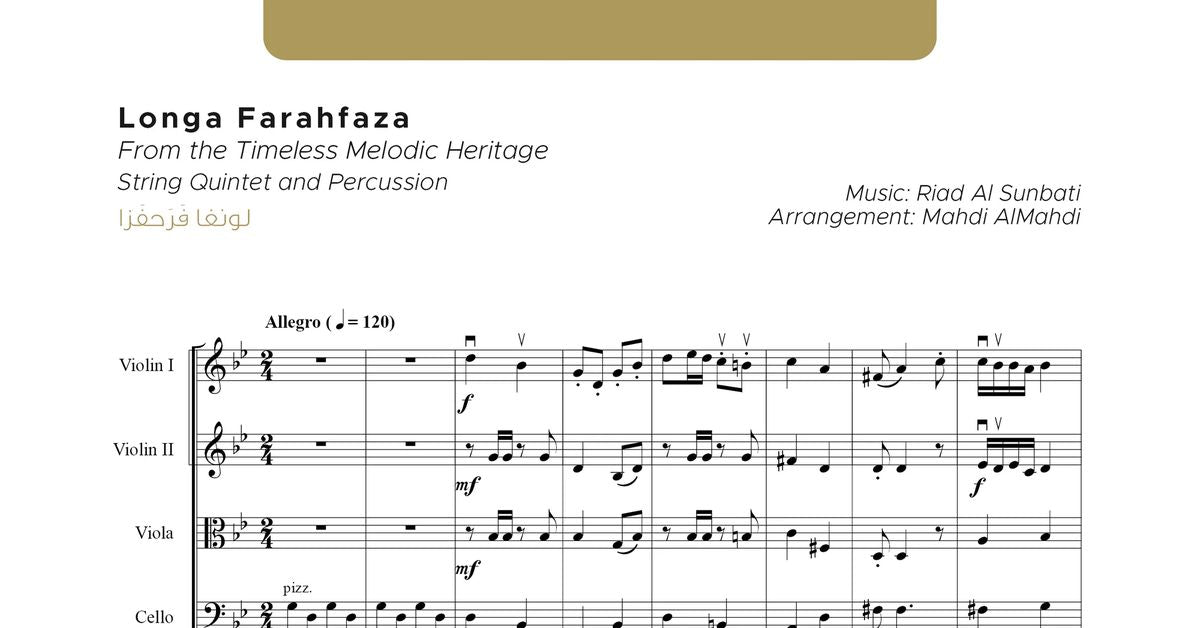
Arabic music always has a pull factor. While your training as a musician may be in the Western musical tradition, it is easy to fall in love with music from the Middle East when you hear its moving melodies and the rich emotional depth. Whatever sparks your curiosity about foraying into the musical heritage of this region, the reality hits you immediately.
Can you overcome the linguistic barrier? Will you find resources to self-train? Will your skills rooted in Western traditions serve as a barrier? The answer is "No" when you have access to the right Arabic sheet music for beginners. At Dozan World, we are witnessing a cultural shift in which Western musicians, young learners, and researchers are increasingly interested in the region's musical heritage. So, if you want to explore the vastness and depth of music from this region, here's how to get started.
If you have decided to learn Arabic music, your inspiration may be as varied as the person you are. Maybe you heard a maqam and couldn't stop thinking about it, or a friend sent you a choral arrangement that immediately grabbed your attention. Whatever may be your inspiration, you need to start with an open mind. Whether you're a vocalist, pianist, or instrumentalist, your immediate focus shouldn't be on mastering every nuance but on enjoying the journey. It won't be easy, and you must try learning one melody at a time and building your confidence.
Download beginner Arabic music sheets, and you may want to give up immediately. Arabic music has a reputation for being intimidating to read on paper. The quarter tones, maqam systems, and rhythmic patterns are different from the Western notation you are familiar with. They can throw off even experienced musicians the first time they open a score. But recall the early musical lessons you took in life, and you would have had the same apprehensions back then. If you stay hooked with an open mind and find the right Middle Eastern sheet music for beginners, you will be on the right path to expand your repertoire.
Try reading Middle Eastern sheet music for beginners, and you will immediately notice how different it looks. While Western sheet music follows a 12-tone scale, Arabic music for beginners often uses maqamat. These scales include intervals smaller than a semitone, such as the quarter tone. While this may sound intimidating, you can pick it up faster than you think. It is important to start with a well-written beginner arrangement that lets you settle in before you try your hand at more difficult scores.
Start with arrangements that have a clear melodic line and minimal ornamentation. Ornamentation is something you can add over time, not something you need to read note for note on day one. Second, choose songs you already recognize, folk tunes, and well-known SATB choral pieces. Familiarity with the melody makes your task easy. Piano arrangements, solo flute, oboe, or clarinet pieces are easy to start with, as these instruments handle quarter tones naturally and are more forgiving than full-ensemble scores. Here are a few pieces that you can start with:
Dr. Shireen Abu Khader curates every piece in our collection. A composer and ethnomusicologist with years of experience studying and preserving the musical traditions of the Middle East, her expertise ensures that every arrangement, from beginner-friendly pieces to advanced scores, stays true to its maqam, quarter-tone structure, and rhythmic roots, so you learn from sources you can actually trust.
Your curiosity is just the starting point, and the first question that comes to mind is where to buy Arabic sheet music. Generic sheet music retailers aren't the place you will find Arabic music for beginners, as you do with Western music. Middle Eastern music hasn't traveled as widely as it should have. Most musical heritage has been passed down orally. Hence, it can be difficult for you to find authentic Arabic sheet music for beginners with a generic online search. Free downloads are also trustworthy, as you may come across inconsistently transcribed pieces or pieces missing quarter-tone notation. If you're going to spend hours learning a piece, it's worth starting from a score that was arranged correctly in the first place. That's where Dozan World has earned the trust of musicians, learners, and researchers from around the world.
We have created a catalog over the years to spread the musical heritage of this region. Every arrangement in our catalog, whether it's a piano piece, a choral score, or an instrumental, is built with the maqam and rhythmic structure intact, preserving its authenticity. Our collection spans everything from folk arrangements to the works of contemporary artists. Along with Middle Eastern sheet music for beginners, we also offer other resources to put you on the right track for your musical journey.
Browse Dozan World's collection of Arabic sheet music for beginners and take the first steps in a new genre with confidence.
How long does it take to get comfortable with quarter-tone notation?
Timelines will vary depending on your skills and the amount of time you practice. Most beginners can get into the track, especially when listening to recordings alongside practice.
What is the best Arabic sheet music for beginners?
You should start with simple melodies that use familiar rhythms and accessible maqamat. Songs with clear notation and moderate vocal or instrumental accompaniment can help you settle in faster.
Where can I buy reliable beginner Arabic sheet music?
Dozan World is the place most musicians and researchers trust. We have built a curated collection of properly notated, beginner-friendly Arabic and Middle Eastern scores across multiple instruments and voicings.
What is the basic difference between Arabic music and Western classical music?
Arabic music places greater emphasis on melody, maqamat, and expressive phrasing, whereas Western classical music often focuses on harmonic progression and formal structure.
Can Western-trained musicians easily adapt to Arabic music?
Yes, and we count hundreds of musicians from the West who have explored our collection and expanded their repertoire with melodies from the Middle East.