Your Cart is Empty

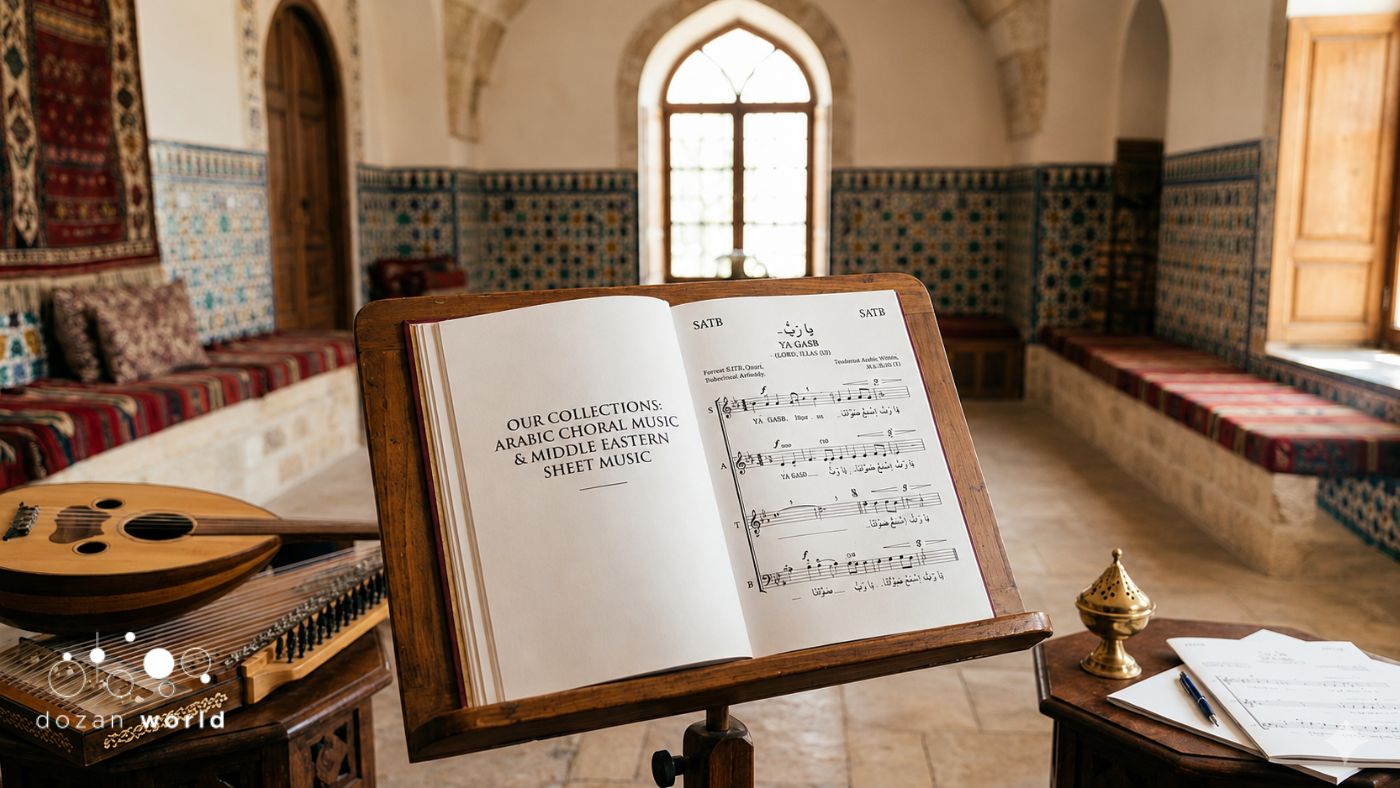
If you are a young choir singer wanting to dive into Middle Eastern music, you will come across the term "SATB" in Arabic sheet music. While you aren't new to SATB style, which originates from Western choral practice, many surprises are waiting for you. You'd be interested in how this Western tradition has blended with Middle Eastern musical heritage and how composers from the region have created a new repertoire gaining popularity worldwide.
To begin with, you need to understand it to have a clear idea of the evolution of choral traditions across the Middle East. Without a clear understanding of Middle Eastern SATB choral music, you won't be able to study the adaptation of regional musical repertoires from this region or practice them to gain mastery over this genre. At Dozan World, we have taken an initiative to introduce the musical heritage of this region with our carefully curated list of Middle Eastern sheet music.
While most choral singers have a basic understanding of SATB, in case you aren't familiar with the basics of choral music, SATB includes four vocal sections that work together to create rich harmonies. In SATB, Soprano, Alto, Tenor, and Bass form the four vocal sections that create a balanced choral sound when one hears them in unison. This widely used format in Western choral traditions has also become increasingly common in arrangements of Arabic and Middle Eastern repertoire. Let us understand the four vocal sections in detail.
Soprano – When you hear a SATB choir, you can distinguish the Soprano, usually sung by a female voice. The Soprano section typically carries the highest notes and often performs the main melody. Sopranos add brightness and clarity to the choir's sound. In many arrangements of Arabic songs, the soprano line may highlight coloring and ornamentations.
Alto – This section also features a female voice, which adds character to the song. Altos sing lower than sopranos and provide warmth and harmonic support. Their role is essential in filling out the middle range of the choir, creating a fuller and more balanced sound.In Arabic choral arrangements, altos often provide harmonic support and help create a rich, balanced sound within the choir.
Tenor - Tenors play a very important role in any choir. While performers sing below the altos, they share melodic responsibilities with the sopranos. This vocal section adds energy and depth to choral arrangements.
Bass – The bass section provides the foundation of the harmony. While it is often an underrated vocal section in a choir, Bass singers support the choir with low notes that help establish the harmonic structure and overall stability of the performance.
As we mentioned earlier, SATB is usually associated with Western music. So, how did it find its way into Middle Eastern sheet music? Historically, much of Arab musical tradition developed through monophonic performances, in which soloists or ensembles shared a single melodic line. Since musical heritage has been passed orally from master to pupil or from one generation to another, there is no documentation to suggest the widespread use of SATB in Arabic Choral Music.
However, the earliest traces of SATB in Arabic sheet music date to the 20th century. It was a time that witnessed significant interaction between musical institutions in the region and those from the West. As Arabic music crossed borders and reached the West, SATB arrangements began to appear in educational and liturgical repertoires. Everything from traditional folk songs to religious repertoire was arranged for SATB by Western composers and locals who had learned Western choral music.
When looking at Arabic Sheet Music or Middle Eastern Sheet Music, you will find clearly marked sections labeled Soprano, Alto, Tenor, and Bass. At Dozan World, all our sheet music has clear distinctions to help you get started easily. To start with -
To conclude, as someone who is taking baby steps in choral music understanding Arabic Sheet Music, Arabic Choral Music, and Middle Eastern Sheet Music, SATB is an important analytical concept. It opens you to the origins of Middle Eastern music and how it has embraced a Western structure to become more familiar with the rest of the world. This knowledge helps you explore cultural exchange and the development of choral traditions throughout the Arab world. At Dozan World, we are not only curating the best SATB scores from the region but also helping music researchers interpret the historical and contemporary music from this region. Explore Arabic music scores today at Dozan World!
Is SATB a traditional feature of Arabic music?
No, SATB originated in Western choral traditions but is being used in modern Arabic choral compositions. Contemporary composers are incorporating SATB in Middle Eastern Sheet Music to make it more accessible worldwide.
Why is knowledge of SATB important for choral singers?
SATB scores provide you with deep insight into the evolution of choral practices in the Arab world. They help you study cultural exchange and the influence of Western music on the development of modern Arabic choral repertoire.
Is SATB notation commonly found in Arabic music?
If you look at contemporary Arabic Music Scores, you will come across SATB arrangements. At Dozan World, we have a vast collection of SATB scores from the region that blends the region's musical heritage with familiar Western choral arrangements.
Have SATB arrangements helped preserve Arabic musical heritage?
Yes, SATB choral music has made Arabic repertoire accessible to larger ensembles and international audiences, helping preserve it.
Are SATB scores useful for comparative musicology research?
Yes, SATB arrangements allow you to compare how different cultures adapt local musical traditions to choral frameworks. With this knowledge, you can develop a better understanding of cross-cultural composition and musical exchange.