Your Cart is Empty

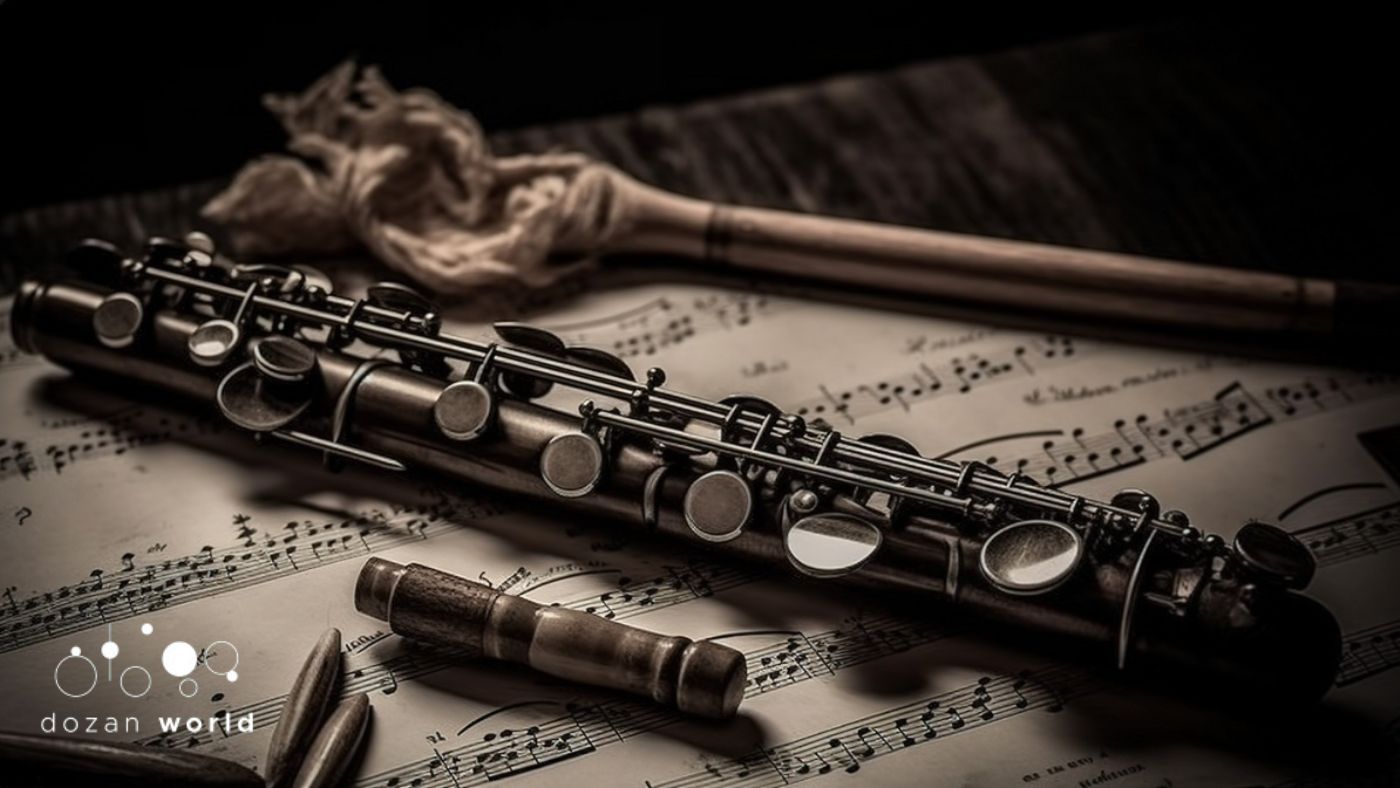
As a musician, you already know that the clarinet is one of the most expressive instruments in the world. It bends, breathes, and speaks in ways few other instruments can. What many Western-trained players haven't yet discovered is how deeply the clarinet belongs to Middle Eastern music. The ney and oud may get more attention, but the clarinet has been central to Arabic, Armenian, and Egyptian musical traditions for well over a century.
At Dozan World, we work directly with these traditions. Our founder, Shireen Abu Khader, has spent decades arranging, performing, and teaching music rooted in the Levant and broader Arabic repertoire. The clarinet solos in our collection aren't adapted from vague "world music" sources; they come from specific composers, specific traditions, and specific emotional contexts.
If you are looking to expand your clarinet repertoire beyond the standard Western classical canon, here are five pieces worth exploring.
1. Bagatelle
Instrumentation: Clarinet and Piano | Best For: Exploring modal colors for the first time
2. Ya Tuyour
Instrumentation: Clarinet and Piano | Best For: Learning agile ornamentation and rhythmic vitality
3. Ana Albi Dalili
Instrumentation: Solo Clarinet | Best For: Mastering Arabic melodic phrasing and expression
4. Sing Me the Universal
Instrumentation: Clarinet and Piano | Best For: Recital programming for mixed audiences
5. Egyptian Tango
Instrumentation: Strings, Clarinet, Piano and Percussion | Best For: High energy, dramatic contrasts, and crowd engagement
A lyrical duo for clarinet and piano, Bagatelle draws from Armenian melodic sensibility with a harmonic language that reflects the broader Middle Eastern region. The clarinet line is expressive and nuanced, making it an ideal entry point for any Western musician exploring modal color for the first time. It is one of our best-selling pieces and a strong starting point for building ensemble sensitivity alongside a new tonal palette.
Instrumentation: Clarinet and Piano
The title translates to "O Birds," and the piece carries that sense of flight. Originally composed by Mohammad al-Qasabji, one of the most influential Egyptian composers of the early 20th century, this arrangement pairs agile clarinet ornamentation with rhythmic vitality drawn from Arabic folk tradition. The piano accompaniment grounds the melodic line while leaving space for the clarinet to breathe and ornament freely. The modal shifts across the piece are where the real learning happens. Room for improvisation is built into the arrangement, which makes it a rewarding piece to return to over time.
Also composed by Mohammad al-Qasabji, the title means "My Heart, My Guide." The solo version is rooted in Arabic vocal tradition and carries a quality of longing that transfers naturally to the clarinet's middle and upper registers. If you have ever wanted to understand how Arabic melodic phrasing differs from Western legato lines, this piece is a practical way in.
This is a piece that genuinely bridges two traditions rather than simply borrowing from one. Inspired by Walt Whitman's poem and a Sufi text, it moves between Western harmonic language and Middle Eastern modal structures in a way that feels intentional rather than decorative. For any clarinetist who wants to develop fluency across both worlds, Sing Me the Universal is worth studying closely. It also works well in solo recital programming where you want to contextualise Middle Eastern music for a mixed audience.
The tango arrived in Egypt in the early 20th century and was absorbed into local musical culture so thoroughly that Egyptian tango became its own genre, distinct from its Argentine origins. This arrangement draws on that tradition, combining Arabic modal phrasing with the rhythmic drive and dynamic contrasts of tango. It is an immediately communicative piece, one that tends to land with audiences who have no prior exposure to Middle Eastern music.
All five of these pieces are available as digital sheet music through our Instrumental Solo collection. Each score is available for immediate download after purchase.
If you are new to the maqam system and want some background before diving into these pieces, our beginner's guide to maqam is a useful starting point. For those interested in Arabic music more broadly, our complete guide to Arabic sheet music covers the historical and theoretical context in more depth.
Why should I try Arabic clarinet solos?
The clarinet has a long history in Middle Eastern music. Exploring that repertoire gives you access to a different melodic logic, a different approach to ornamentation, and a different relationship between the soloist and the emotional content of the piece. It will change how you hear the instrument.
Are these solos suitable for beginners?
Some are more accessible than others. Bagatelle is a good starting point for intermediate players. Ya Tuyour and Egyptian Tango require more comfort with ornamentation and rhythmic nuance. If you are unsure, start with the piece whose description interests you most and work from there.
What makes a clarinet solo truly memorable?
In the Western classical tradition, that question usually gets answered in terms of technique and phrasing. In Arabic music, the answer often comes down to whether the player understands the emotional intent behind the mode they are playing in. That is something that develops with exposure, not just practice.
Are these pieces exclusively for clarinet?
Most of the arrangements in our collection are written for clarinet with piano accompaniment, or clarinet as a solo instrument. Some can be adapted for flute. If you are working on ensemble programming, feel free to contact us and we can advise on what transfers well.
Do I need to know Arabic to perform these pieces?
No. What helps is a basic awareness of the maqam system, particularly the difference between equal-tempered tuning and the microtonal inflections that characterize Arabic melodic lines. That awareness will inform how you approach ornamentation and phrasing, even without any language knowledge.
Where can I purchase these solos?
All five pieces are available through the Instrumental Solo collection on the Dozan World website. Download is immediate after purchase.
Are Arabic clarinet solos harder than Western classical pieces?
Not harder in terms of technical demands, but different. The main adjustment for most Western-trained players is the maqam system, which uses intervals that do not appear in equal temperament. With some listening and focused practice, most intermediate players adapt reasonably quickly.