Your Cart is Empty

Arabic sheet music opens a doorway into one of the world's richest musical traditions, offering a tapestry of melody, rhythm, and cultural expression stretching from Andalusia to the Levant. Whether you are a Western-trained musician exploring new repertoire, a choir director searching for culturally meaningful material, or a student of Middle Eastern music, finding the right scores can transform how you understand and perform Arabic compositions.
This guide answers the most common questions musicians have about Arabic sheet music: what it is, how its notation works, which instruments and ensembles use it, and where to find high-quality scores today.
Arabic sheet music is the written notation of compositions rooted in the Arabic and broader Middle Eastern musical tradition. Like Western sheet music, it uses a five-line staff, note values, and rhythmic notation, but it also incorporates additional symbols specific to Arabic music, most notably quarter-tone accidentals that represent the microtonal intervals central to the maqam system.
Much of Arabic music has historically been transmitted orally, from teacher to student across generations. Written notation makes these compositions accessible to musicians who did not grow up in that tradition, and it ensures that arrangements can be performed consistently by ensembles, particularly choirs and chamber groups, where everyone needs to read from the same page.
The maqam (plural: maqamat) is the foundational concept behind Arabic music, comparable in some ways to the Western concept of a musical mode or scale, but far richer in its emotional and cultural associations. Each maqam carries a distinct mood, a characteristic melodic movement, and specific ornamental patterns that define how a piece should feel and be performed.
Well-known maqamat include Rast, Bayati, Hijaz, and Saba. Each has a unique interval sequence, often incorporating the half-flat or half-sharp intervals that give Arabic music its characteristic sound. In written scores, these intervals are indicated using quarter-tone symbols alongside standard Western accidentals.
If you are new to reading Arabic music notation, our guide on Arabic music notation and quarter tones is a practical starting point.
Some of the most sought-after Arabic sheet music today is arranged for SATB choir, soprano, alto, tenor, and bass. As choirs worldwide look to diversify their repertoire beyond the European canon, Middle Eastern choral music has become a compelling choice, offering audiences something genuinely unfamiliar while remaining singable and emotionally resonant. Pieces rooted in Levantine, Maronite, and Syriac sacred traditions sit alongside secular folk arrangements in this category. Browse Dozan World's choral sheet music collection for SATB-ready Arabic and Middle Eastern scores.
Arabic vocal music prizes the ability of a single voice to carry immense expressive weight. Solo scores often include detailed guidance on ornamentation, melismatic phrasing, and the characteristic slides and microtonality of the tradition. These scores are used by classical Arabic singers as well as Western vocalists learning the tradition for the first time. Dozan World's vocal and human voices collection includes solo Arabic compositions for a range of voice types.
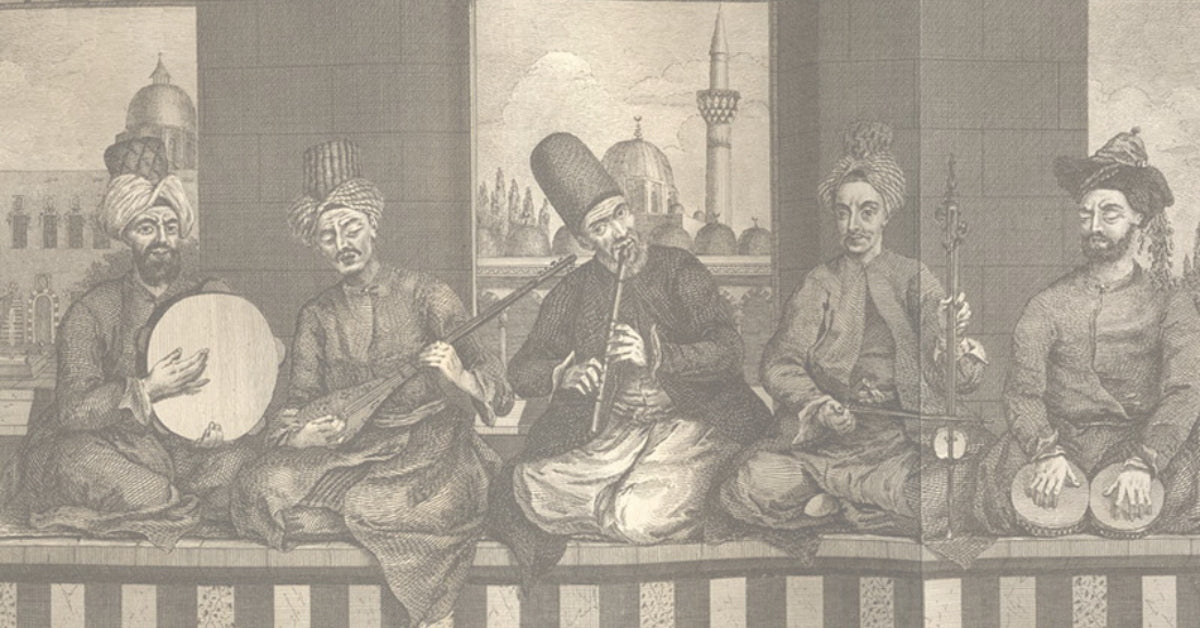
Arabic instrumental music spans a wide range of ensembles. Traditional instruments like the oud, qanun, and nay have dedicated solo repertoire, while arrangements for violin, cello, flute, clarinet, and piano bring Arabic melodies into Western chamber and orchestral contexts. Dozan World publishes instrumental sheet music for both solo and ensemble settings, including woodwind trios and chamber arrangements of well-known Arabic pieces.
Middle Eastern sacred choral music encompasses Byzantine, Maronite, Syriac, Coptic, and Sufi traditions, each with its own modal vocabulary and performance practice. These scores are valuable for faith communities, music educators, and ensembles seeking repertoire with deep spiritual and historical roots. Explore Dozan World's sacred choral music collection for liturgical Arabic and Middle Eastern scores.
If you are a Western-trained musician encountering Arabic notation for the first time, the quarter-tone symbols may seem unfamiliar but are quickly learned. Read our practical guide on navigating the quarter-tone challenge before your first rehearsal.
Yes, with some considerations. String instruments (violin, viola, cello) can reproduce quarter-tones by adjusting finger placement and bow pressure, making them natural fits for Arabic music. Woodwind instruments can approximate many microtonal intervals through fingering and embouchure adjustments. The piano, as a fixed-pitch instrument, cannot reproduce quarter-tones exactly, but piano arrangements of Arabic music are widely performed using the nearest available pitches, and many composers write specifically for this constraint. Dozan World scores indicate clearly which pieces are arranged for Western instruments, making it easy to choose repertoire suited to your ensemble.
The availability of high-quality Arabic sheet music has grown significantly as global interest in Middle Eastern music has increased. A few points to consider when choosing a source.
Authenticity matters. Arrangements made by musicians with deep knowledge of the tradition, including its ornamentation, modal nuances, and performance practice, will produce better musical results than generic transcriptions. Look for publishers who work with Arab composers and arrangers directly.
Digital scores are the most practical format for most musicians today, as they can be downloaded immediately, printed at any size, and used across devices during rehearsal.
Dozan World was founded specifically to address the shortage of professionally arranged, digitally accessible Arabic and Middle Eastern sheet music. Founded by Shireen Abu Khader, a Palestinian-Jordanian composer and choral educator, the platform offers a growing library of scores across choral, sacred, instrumental, and vocal solo categories, all arranged by musicians rooted in the tradition.
Dozan World offers a selection of free scores as an introduction to the library. These are ideal for educators, directors, and musicians who want to explore the repertoire before committing to a purchase. Free scores are available across several categories, including vocal, instrumental, and choral, and can be downloaded directly from the site.
What file format will I receive when I purchase scores?
All scores on Dozan World are delivered as high-quality, digital PDF files. You can download them immediately after purchase, view them on any digital device or tablet during rehearsal, and print copies as needed for your ensemble.
Is Arabic sheet music written differently from Western sheet music?
The staff and rhythmic notation are the same as in Western music. The primary difference is the addition of quarter-tone symbols, which indicate pitches that fall between the standard semitones of Western tuning. These symbols are easy to learn with brief guidance.
Can I use Arabic sheet music with a Western ensemble?
Yes. String, woodwind, and brass players can adapt to Arabic microtones with practice. Many Dozan World scores are specifically arranged for Western ensembles including string quartets, woodwind trios, and SATB choirs.
What is a maqam?
A maqam is a modal scale used in Arabic and Middle Eastern music. Each maqam has a specific interval pattern, emotional character, and associated melodic patterns. Common maqamat include Rast, Bayati, Hijaz, and Saba.
Where can I download Arabic sheet music?
Dozan World offers a curated library of Arabic and Middle Eastern sheet music available for immediate digital download, covering choral, instrumental, vocal, and sacred categories.