Your Cart is Empty

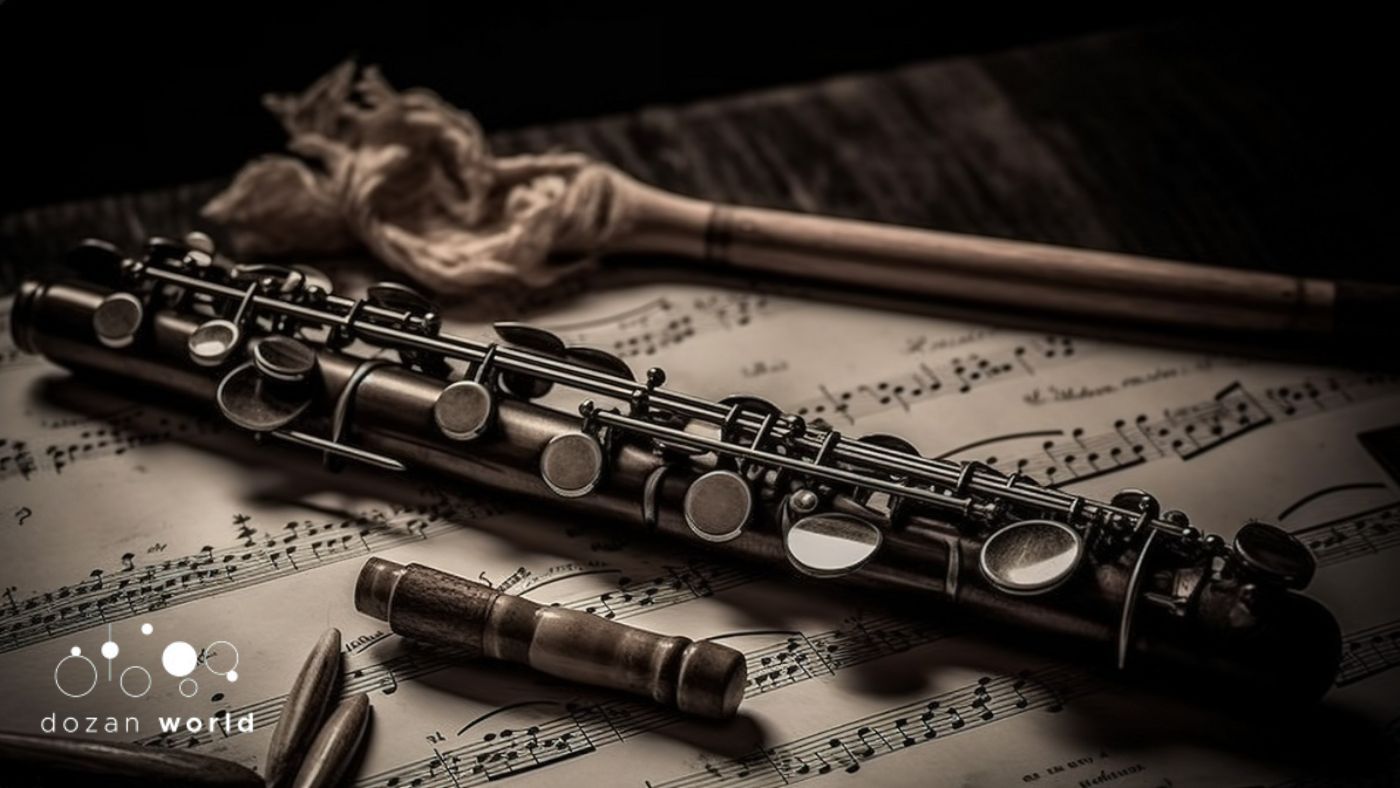
As a musician, you already know that the clarinet is one of the most expressive instruments in the world. It bends, breathes, and speaks in ways few other instruments can. What many Western-trained players have not yet come across is how well it suits Arabic and Middle Eastern music, and how much that repertoire can teach about phrasing, ornamentation, and modal color.
At Dozan World, we work directly with these traditions. Our founder, Dr. Shireen Abu Khader, has spent decades arranging, performing, and teaching music from the Levant and the wider Arabic repertoire. The pieces below come from our catalog, and each one has its own sheet music page.
If you want to expand your clarinet repertoire beyond the standard Western classical canon, here are five pieces to consider.
The best clarinet solos for players who want new repertoire are pieces that teach something fresh about phrasing, ornamentation, and ensemble balance. This guide covers five Arabic and Middle Eastern clarinet pieces from Dozan World: Bagatelle, Ya Tuyour, Ana Albi Dalili, Sing Me the Universal, and Egyptian Tango. Four are for clarinet and piano, and one is for a larger ensemble. Intermediate and advancing clarinetists, teachers, and chamber players will get the most from them.
A clarinet solo is a piece in which the clarinet is the main melodic voice, with or without accompaniment. An unaccompanied solo has no other parts. In clarinet and piano music, the clarinet leads the melody over piano support. In an ensemble piece, the clarinet shares the texture with other instruments.
Here, “solo” refers to the clarinet’s featured melodic role. Four selections are for clarinet and piano. Egyptian Tango adds strings and bongos, so the clarinet is one voice in a larger ensemble. None of the five is an unaccompanied piece, and we label each one clearly.
Most clarinet students spend years in the classical canon of sonatas, concertos, and études. Contemporary works and chamber music add new demands. Arabic and Middle Eastern pieces add another: melody shaped by modes, ornaments that give each phrase its character, and rhythms that may feel unfamiliar at first. Meeting these ideas on an instrument you already know well sharpens your ear and gives you recital programs that stand out.
The clarinet appears in a range of Middle Eastern musical settings, and its role varies by region, period, and ensemble. Think of these five pieces as one way in, not the whole picture.
We chose these pieces for their variety. They differ in mood, technique, and setting, and each one gives the clarinet something different to do. All five connect to Arabic and Middle Eastern repertoire, and they suit recitals, studio teaching, and chamber programs. This is an editorial selection from our own catalog, not a ranking of the greatest clarinet solos ever written.
|
Composition |
Instrumentation |
Suggested level* |
Best for |
|---|---|---|---|
|
Bagatelle |
Clarinet and piano |
Intermediate |
Lyrical phrasing and ensemble sensitivity |
|
Ya Tuyour |
Clarinet and piano |
Intermediate |
Ornamentation and vocal-style phrasing |
|
Ana Albi Dalili |
Clarinet and piano |
Intermediate to advanced |
Arabic melodic phrasing, runs, and expression |
|
Sing Me the Universal |
Clarinet and piano |
Intermediate to advanced |
Recital programming for mixed audiences |
|
Egyptian Tango |
Strings, clarinet, piano, and bongos |
Intermediate |
Ensemble playing and school or youth groups |
Composer: Sevag Derghougassian | Instrumentation: Clarinet and piano | Suggested level: Intermediate
Bagatelle is a lyrical, personal piece for clarinet and piano. It is dedicated to the soul of a friend and was composed at the request of a clarinet player who never had the chance to hear it. It also alludes to one of the composer’s earlier works, which gives it a reflective, story-like feel. A bagatelle is traditionally a short form, so it suits players who want expressive depth in a compact piece. It is one of our best-selling pieces. The product notes do not name a maqam, so we describe its character instead of labeling it.
We suggest intermediate level because the piece asks for steady breath support, an even tone, and careful dynamic shading. The piano is a true partner, so clarinetists also build ensemble sensitivity by shaping phrases together with the accompanist. It works well as a short recital opener.
View the Bagatelle for Clarinet and Piano sheet music.
Original song:Performed by Asmahan | Composer credit:Mohammad al-Qasabji | Instrumentation:Clarinet and piano | Suggested level:Intermediate
The title translates to “O Birds,” and the piece carries that sense of flight. The song is closely associated with the singer Asmahan, and biographical sources list it among the works of Mohammad al-Qasabji, one of the leading Egyptian composers of the 20th century. This clarinet and piano arrangement celebrates that song, whose lyrics describe the beauty of nature and an enduring love story. The piano supports the melodic line and leaves the clarinet room to breathe and ornament.
We suggest intermediate level because the main work is musical. Vocal melodies carry ornaments that are best learned by ear, so listen to a reliable recording of Asmahan’s performance before you start. It will show you where phrases breathe and where ornaments fall. Practicing this piece builds ornamentation, vocal-style phrasing, and control of a long line.
View the Ya Tuyour clarinet and piano score.
Melody by: Mohammad al-Qasabji | Instrumentation: Clarinet and piano | Suggested level: Intermediate to advanced
The title means “My Heart, My Guide.” Mohammad al-Qasabji was one of the leading Egyptian composers of the 20th century, and this edition is a clarinet and piano arrangement inspired by the love song of the same name. It is not an unaccompanied clarinet solo. If you have ever wanted to understand how Arabic melodic phrasing differs from a Western legato line, this piece is a practical way in.
We suggest intermediate to advanced level because the product notes point to runs and ornaments. Runs need even fingers and clean articulation, and ornaments need rhythmic freedom that still respects the pulse. Practicing with the original recording, as the notes recommend, makes both much easier.
View the Ana Albi Dalili clarinet and piano sheet music.
Composers: Shireen Abu Khader and Majd Maary | Instrumentation: Clarinet and piano | Suggested level: Intermediate to advanced
This piece began as a setting of Arabic and English poetry for mezzo-soprano and has been adapted for clarinet. It is inspired by Walt Whitman’s poem “Sing Me the Universal” and a Sufi poem, and the cover carries the subtitle “When East Meets West.” It brings two opposing styles, in culture and in color, into one piece. Our product page describes it for a daring clarinetist willing to feel the pull of both the Eastern Arabic sound and the Western one.
We suggest intermediate to advanced level because it asks you to move between two musical languages with flexible phrasing and clear dynamic contrast. The product notes do not name a maqam, so we do not assign one. It works well in recital programming for mixed audiences, and short program notes about the two poems help listeners follow the story.
View the Sing Me the Universal clarinet and piano score.
Instrumentation: Strings, clarinet, piano, and bongos (parts included) | Suggested level: Intermediate
Egyptian Tango is a love tango with a heart-breaking background story. Our listing connects it to the song Ya Zahratan Fi Khayali and describes a piece about longing that shows how Oriental music composers have long drawn on foreign forms and genres. The arrangement blends Oriental and Western styles for strings, clarinet, piano, and bongos, and a recording is available on the product page.
We suggest intermediate level, in line with the medium difficulty on the listing. The clarinet plays within a larger ensemble, so rhythm, balance, and entrances matter as much as the notes. The listing also recommends it for youth strings, clarinet, and percussion, which makes it a good fit for school and community groups. Clarinetists who learn it build rhythmic precision and the habit of blending with strings and a bongo part.
View the Egyptian Tango sheet music.
Each piece highlights a different skill:
A maqam is a modal framework. It shapes a melody’s characteristic pitches, phrase contours, and emotional color, and it is not the same thing as a Western scale. Some maqamat use intervals that do not appear in equal temperament, but not every Arabic piece uses quarter tones. The product notes for these five pieces do not name a maqam, so we do not label them.
For clarinetists, the practical lessons are to listen first, learn how the mode pulls toward certain notes, and shade pitch with care where the style calls for it. A teacher who knows the style can help a great deal. Our guide to Arabic music notation explains maqam and quarter tones in more detail, and Britannica has a short entry on maqam.
Many of them are. Bagatelle, Ya Tuyour, and Egyptian Tango suit intermediate players. Ana Albi Dalili and Sing Me the Universal ask for more finger control, flexible timing, and stylistic range. Difficulty also depends on your training and your experience with Arabic music, so listen to a recording and look at the score preview before you choose.
Listening matters most. Much of this style is learned by ear.
Match the piece to your current ability, your practice time, and your goal, whether that is a recital, a studio class, or personal study. Check that you have access to an accompanist or an ensemble, and choose a challenge you can meet in a few weeks of focused work.
It offers a different approach to melody, ornamentation, and rhythm, along with recital repertoire your audience may not have heard before. It is not inherently easier, harder, or more expressive than Western classical music. It is different, and that difference helps you become a more flexible player.
Our clarinet and instrumental solo sheet music collection includes the clarinet and piano scores above, and Egyptian Tango has its own product page. Several of these titles also come in flute, oboe, or trumpet editions, so check that you choose the clarinet version. If you are new to the notation, our guide to Arabic sheet music is a good place to start, and our guide to woodwind trios is a useful next read for chamber players.
Dozan World is a publisher of Arabic, Middle Eastern, choral, and instrumental sheet music. Our founder, Dr. Shireen Abu Khader, is a Palestinian Jordanian artist, composer, and educator. She earned a BA in Music Education from Oberlin College Conservatory in 1994, a Master’s degree in Choral Music from the University of Southern California in 1998, and a PhD from the University of Toronto in 2019. That background shapes how we approach music education and publishing.
Written by the Dozan World editorial team.
Bagatelle, Ya Tuyour, and Egyptian Tango suit intermediate players. Ana Albi Dalili and Sing Me the Universal are better for intermediate to advanced players who are comfortable with runs, flexible timing, and moving between styles. Difficulty depends on your training, so listen to a recording and check the score preview before you choose.
No. Four are for clarinet and piano, and Egyptian Tango is for strings, clarinet, piano, and bongos. In this article, “solo” means the clarinet’s featured melodic role. An unaccompanied solo has no other parts, while clarinet and piano music gives the clarinet the melody over piano support.
Our clarinet edition is an arrangement for clarinet and piano of a melody by Mohammad al-Qasabji, inspired by the love song of the same name. The clarinet carries the melody and the piano accompanies it, so it is not an unaccompanied piece.
Biographical sources list Egyptian composer Mohammad al-Qasabji as its composer, and the singer Asmahan is the performer most associated with the song. The composer and the original performer are different roles, so it helps to credit both when you program the piece. Our edition is a clarinet and piano arrangement of that song.
A basic understanding helps with phrasing and pitch, but it is not enough on its own. Listen to recordings, study the score, and work with a teacher who knows the style if you can. Our guide to Arabic music notation is a good starting point.
Yes. The clarinet carries the featured melody and a pianist supports it. Many players program two or three pieces together and add short notes about each song or poem, which helps mixed audiences connect with the music.
Our Instrumental Solo collection lists our clarinet and piano scores, and each piece in this article links to its own page, including Egyptian Tango. Check that the page names the clarinet edition before you buy.
Building a varied clarinet repertoire sharpens your ear and your phrasing. Each of these five pieces teaches something specific: breath and dynamics in Bagatelle, ornamentation in Ya Tuyour, runs and expressive timing in Ana Albi Dalili, stylistic contrast in Sing Me the Universal, and ensemble coordination in Egyptian Tango. Understanding maqam and listening closely will help you play all of them with more confidence.
If you are a clarinet player, student, or teacher looking for your next piece, view our clarinet and instrumental sheet music collection and open the individual scores that suit your level.