Your Cart is Empty

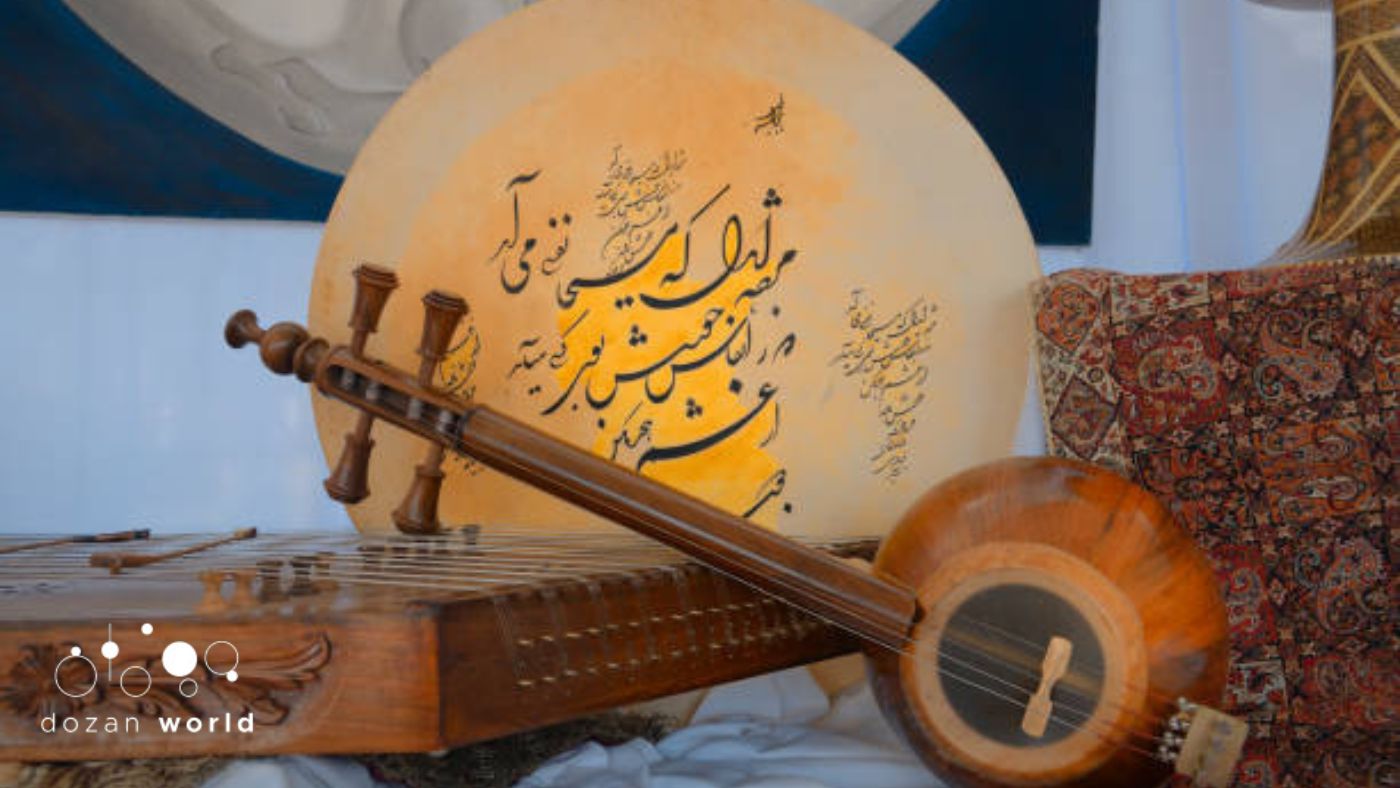
A quarter-tone is a microtonal interval that sits exactly halfway between two standard Western semitones. In Arabic sheet music, these intervals are not decorative; they are structural. They define the maqam (modal scale) and give Arabic melodies their characteristic sound. If you are picking up Arabic sheet music for the first time and the notation looks unfamiliar, this guide will help you understand what you are seeing, why it exists, and how to train your ear to hear it correctly.
Most Western musicians learn to divide an octave into 12 equal semitones. Arabic music uses a finer grid. Some of those semitone gaps are split further, producing up to 24 distinct pitches per octave. That is the quarter-tone system, and it is at the heart of every maqam you will encounter in Middle Eastern music.
The maqam system is to Arabic music what the major-minor key system is to Western classical music; it is the foundational framework. Each maqam defines a specific set of intervals, a starting note, characteristic phrases, and an emotional character. There are dozens of maqamat, but beginners typically start with four or five common ones.
What makes maqamat different from Western scales is not just the microtones. Each maqam also carries an expressive identity. Maqam Rast is often described as balanced and open. Maqam Hijaz carries a sense of longing. Maqam Bayati has a more melancholic, introspective feel. When you read an Arabic score, knowing the maqam tells you more than just which notes to play; it tells you how to shape phrases and where to add ornamentation.
Dozan World’s instrumental sheet music collection includes pieces written across multiple maqamat, with notation that clearly marks microtonal intervals so you know exactly where quarter-tones appear.
In standard Western notation, the smallest interval is a semitone, the distance between, say, E and F, or B and C. A quarter-tone is half of that. It sits between E and E-flat, for instance, at a pitch that has no standard name in Western theory.
In Arabic scores, a half-flat symbol (resembling a reversed flat sign, sometimes written as ♭ with a slash) marks a note lowered by a quarter-tone. A half-sharp raises a note by the same amount. Once you learn to recognize these symbols, reading Arabic notation becomes much more straightforward.
The quarter-tone is not an imprecision or an approximation. It is a precise, intentional interval that has been part of Arabic musical theory for over a thousand years. Performing it correctly requires ear training, not just reading skill.
The process of learning to read Arabic sheet music is similar to learning any new notation system; it takes focused, incremental practice. Here is a practical sequence that works for most musicians coming from a Western background.
Quarter-tones are straightforward on fretless string instruments, the oud, the ney, and the human voice. They are more complex on fixed-pitch instruments like piano or guitar. On keyboard instruments, quarter-tones are not possible without electronic modification. If you are arranging Arabic music for piano, you will often see the quarter tone approximated or omitted, and this is a standard practice, not an error. The score should indicate clearly which approach the composer intended.
Not every microtonal inflection in an Arabic performance is written in the score. Some are improvised ornaments, and some are structural scale degrees. Beginners often try to notate every microtone they hear in a recording, including the ornamental ones. Read the written score first, then add only the ornaments that are marked.
For most Western-trained musicians, the ear adjusts to quarter-tones within a few weeks of regular focused listening and practice. The key word is "focused." Passive listening to Arabic music in the background will not train your ear as effectively as deliberate phrase-by-phrase study. Set aside even 10 minutes a day for targeted ear training and you will notice consistent progress.
The quality of the score matters enormously when you are learning to read Arabic music. Poorly transcribed scores often omit or misplace microtonal symbols, which creates confusion and bad habits early on. Dozan World’s sheet music library is prepared in collaboration with composers and arrangers who are native to the tradition. The notation is accurate, the maqam is clearly identified in each piece, and the scores are graded by difficulty.
You can explore the collection by instrument or ensemble type:
For instrumentalists: Instrumental Sheet Music
Each product page includes the maqam name, difficulty level, and ensemble format so you can choose pieces that match where you are in your learning.
Ready to start reading Arabic sheet music?Browse the Dozan World sheet music library and filter by maqam, instrument, and difficulty level.
What is a quarter-tone in Arabic music?
A quarter-tone is a microtonal interval equal to half a standard Western semitone. In Arabic music, quarter tones are structural pitches; they appear in maqam scales as defined scale degrees, not as accidental ornaments. They are notated using half-flat and half-sharp symbols in written scores.
Are quarter-tones difficult to learn?
Quarter-tones are unfamiliar to Western-trained musicians but not inherently difficult. The main challenge is ear training rather than technique. Most musicians find that regular, focused listening and practice over a few weeks produces noticeable improvement in microtonal accuracy. Starting with maqamat that are closer to Western scales, like Nahawand or Rast, makes the process easier.
How can a beginner learn to read Arabic music scores?
Start by learning the structure of two or three common maqamat. Then work through short pieces that use those maqamat, identifying all microtonal symbols before you play. Practice slowly, use accurate recordings as a reference, and gradually increase tempo. Scores with clear maqam labeling and difficulty grading make this process considerably more manageable.
Can Western instruments play quarter-tones?
It depends on the instrument. Fretless strings (violin, viola, and cello); oud; ney; and voice can produce quarter-tones naturally. Fixed-pitch instruments like pianos cannot be without electronic modification. In arrangements for piano or guitar, quarter-tones are typically approximated or omitted, and this is noted in the score.
Why are quarter-tones important to Arabic music?
Quarter-tones define the maqam system, which is the foundation of Arabic musical theory. Without microtones, it is not possible to accurately reproduce the modal character of Arabic melodies. The emotional quality of a maqam, its particular mood and expressive identity, is partly created by where the quarter-tones sit within the scale.