Your Cart is Empty

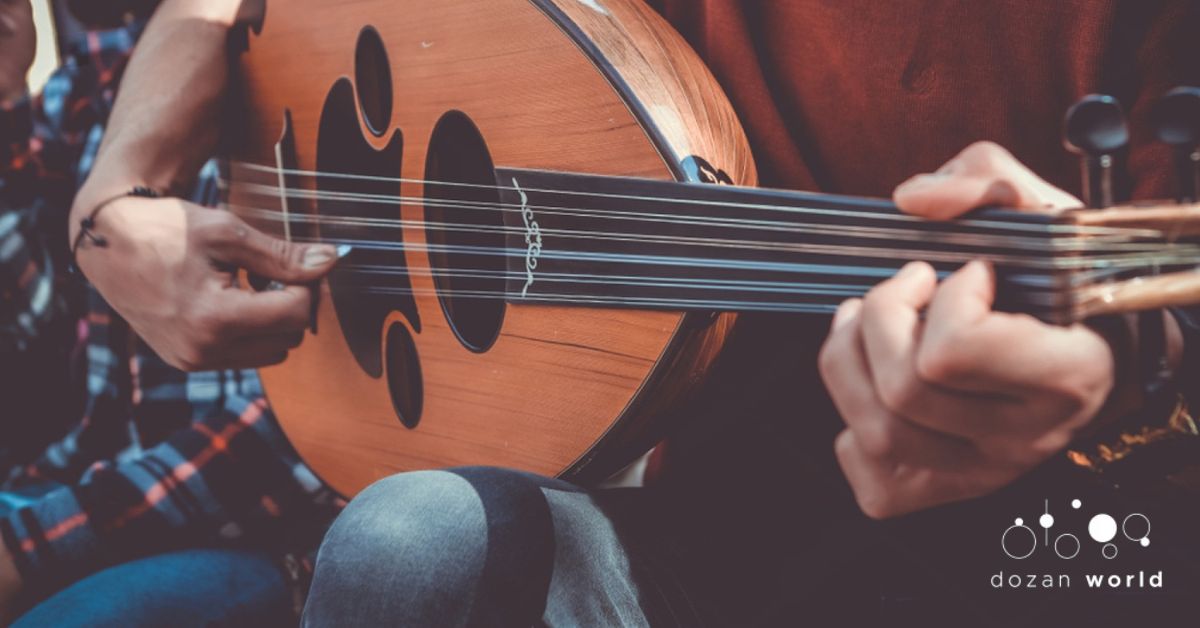
Lamma Bada Yatathanna is a famous Arabic muwashshah, a sung strophic poem from the Arab-Andalusian tradition. Its title means roughly "when my beloved appeared swaying." It is usually performed in maqam Nahawand over a ten-beat rhythm from the Samai family. Its authorship is disputed, but its graceful poetry and memorable melody keep it in the repertoire. For beginners, it is one of the clearest doorways into Arabic vocal music and maqam.
Lamma Bada Yatathanna (لما بدا يتثنى) is a well-known Arabic muwashshah, a poem written to be sung. It pairs classical Arabic poetry with a melody that listeners remember after one hearing. It is widely taught as an entry point to Arabic vocal music.
A muwashshah is built from repeating and contrasting sections. The form developed in al-Andalus in the late 10th and early 11th centuries. It later spread across the Arab world, where it survives largely through oral tradition.
Today, soloists, instrumental ensembles and choirs all perform the piece. That is why you will hear many different versions.
The title means roughly "when he appeared, swaying." Lamma means "when," bada means "appeared," and yatathanna describes a graceful, bending walk. The opening line goes on to say that the beloved's beauty captivated the speaker.
The poem is a love lyric built on images of movement, beauty and longing. That is a translation of the sense, not an exact equivalent. Arabic poetry depends on rhyme, sound and word choice that English cannot fully carry.
For singers, learning the meaning matters. Knowing which word carries the feeling tells you where to place the phrase's weight.
No one can say for certain. Sources differ, and we prefer to say so rather than invent a clean answer.
The safest description is a traditional piece with disputed attribution. Any single named composer should be read as one claim among several.
It is traditionally associated with Arab-Andalusian heritage, because the muwashshah form was born in al-Andalus. That does not mean the melody you hear today is a preserved medieval tune.
Music in this tradition travelled by memory, from teacher to student and from region to region. The versions most listeners know were shaped by performance in Mashriq, the eastern Arab world. Catalogues often file the piece there, and some list Syria as its country.
"Andalusian" is a useful label for the tradition, not a complete explanation of this version. A modern arrangement is not an original historical version.
Most sources place it in maqam Nahawand, with a ten-beat rhythm in the Samai family. Editions group those beats differently, so treat the exact pattern as something to confirm in the version you study.
A maqam is a melodic framework. It includes a set of pitches, but also characteristic phrases, important resting notes, and rules for how a melody moves. This is why a maqam is not simply an Arabic version of a Western scale. Our guide to what maqam is and why it matters for Arabic sheet music covers the basics.
Nahawand sounds close to a Western minor scale to many listeners. That is a helpful first impression, but only a starting point. It is one reason the piece suits newcomers, since other maqamat such as Rast and Bayati use more flexible intervals.
Always check the key and rhythm of your specific arrangement. Arrangers sometimes change them.
The melody is simple in outline, and its character comes from how it is sung. No single sound defines all Arabic music, so this piece is one example, not the whole picture.
Listen for these features:
Cadences, the places where phrases come to rest, are worth noting. In a maqam, these resting notes are part of its identity.
It is one of the best-known examples of the muwashshah repertoire. We would not call it the oldest or the most important, since no reliable source supports those claims.
Its value is practical:
It is a good choice because the text is short and the melody repeats. Singers can focus on Arabic pronunciation and phrasing without learning an enormous score.
Start with pronunciation. Sounds such as ḥ, ʿ and q do not exist in English, so listen to native Arabic singers before you rehearse. Keep vowels pure and consonants clear, and let the word stress guide each phrase.
Choir directors can use the piece to teach several things at once:
Arrangements differ in voicing and structure, so check each score before rehearsal. Our Lamma Bada Yatathanna SAB arrangement is one option for mixed-voice choirs. If you are building a wider program, our guide to Middle Eastern SATB scores for choirs is a helpful next read.
Listen first, then read, then sing. Traditional Arabic repertoire is learned by ear, and notation works best as a companion to recordings.
Yes, sheet music helps with pitch, rhythm, structure and text placement. It cannot capture every detail of a sung performance, so use it alongside recordings.
Notation shows you the skeleton of the piece. Ornamentation, small pitch inflections and timing live mostly in the performance tradition. Reading and listening together is the reliable approach.
If Arabic notation is new to you, start with our guide to Arabic music notation, quarter tones and maqam. Our article on Arabic sheet music for beginners suggests where to begin.
What is Lamma Bada Yatathanna?
It is a well-known Arabic muwashshah, a sung strophic poem in the Arab-Andalusian tradition. It is usually performed in maqam Nahawand and is often used to introduce learners to Arabic vocal music.
What does Lamma Bada Yatathanna mean?
It means roughly "when my beloved appeared, swaying." The poem is a love lyric about the beauty and grace of the beloved.
Who wrote Lamma Bada Yatathanna?
The author is disputed. The text is commonly linked to Ibn al-Khatib, while some sources credit the melody to Muhammad Abd al-Rahim al-Maslub. Many archives simply list it as traditional.
What maqam is Lamma Bada Yatathanna in?
Most sources and recordings use maqam Nahawand. Check the specific arrangement you are studying, because versions can differ.
Is there sheet music for Lamma Bada Yatathanna?
Yes. Several arrangements exist for voice, choir and instruments, including our own SAB version. Choose a score that matches your voicing and level, and listen to a recording while you read.
Can a beginner sing Lamma Bada Yatathanna?
Yes. The text is short and the melody repeats, so it suits learners. Listen to native Arabic singers for pronunciation, and learn one phrase at a time.
Lamma Bada Yatathanna is a traditional Arabic muwashshah that joins classical poetry, melody and rhythm. Its authorship is disputed, and modern versions differ, but its graceful text and memorable tune keep it in regular performance. It is a clear and approachable example of Arabic vocal music.
For singers, choir directors and teachers, it offers a manageable way to learn Arabic pronunciation, hear ornamentation, and meet maqam in practice. If you would like to take the next step, browse our Arabic and Middle Eastern sheet music collections and choose a score that fits your voices or instruments.