Your Cart is Empty

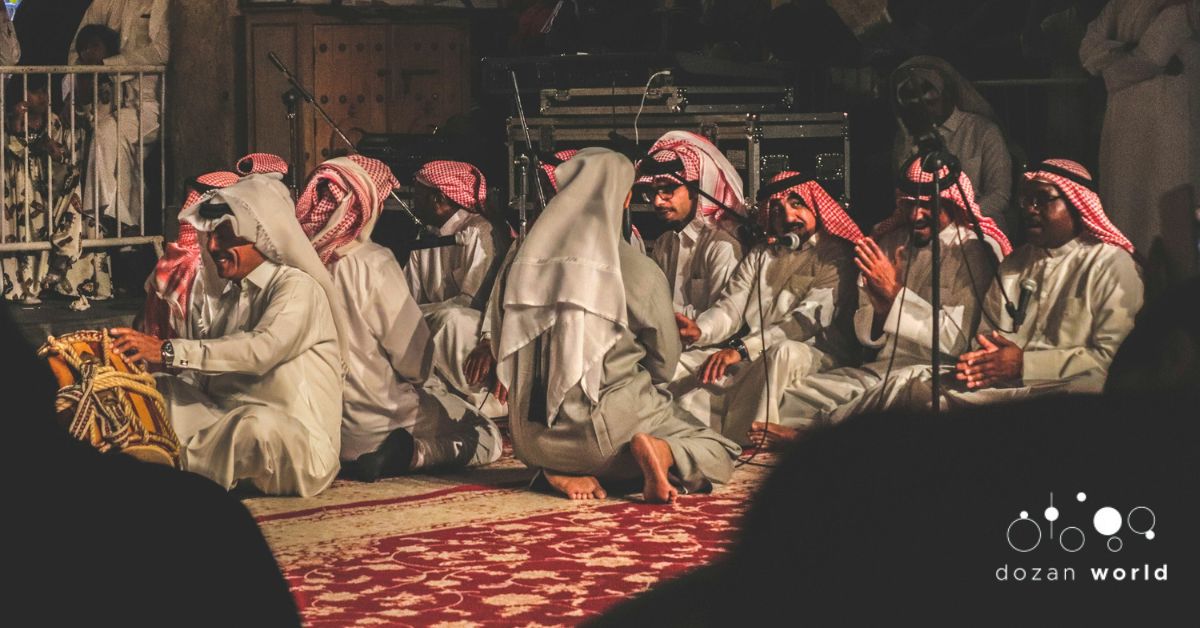
Most Western musicians and music students primarily focus on classical, jazz, or contemporary vocal traditions. If you are one among them, you aren’t to blame, as Western music has a vast repertoire that an average person cannot explore in a lifetime. But in today’s multi-cultural society, where you are meeting people from different parts of the world, it is equally important to expand your soundscape and explore the rich musical heritage from other parts of the world. If that sounds interesting, we at Dozan World invite you to explore the intricate world of Arab vocal music. This less explored territory offers you the chance to try unique scales and the rich verses intrigue you with their expressive traditions.
Arab vocal music boasts a heritage that spans centuries. After all, this region is the birthplace of different religions and cultural identities, with the musical traditions dating back more than two millennia. The music here is deeply rooted in the cultural, poetic, and spiritual traditions. As a melting point of different civilizations, the music and the verses bear the rich influence of each of them. If you pick up the translation of Arab vocal music, you will find a blend of Arabic poetry, religious prayers, and regional folk traditions.
From intricate melodies that impress with their expressive nuance to the story of human resilience, the vocal music from this region captures the lived history of the different communities that inhabit it. Hence, the music here is not only a form of artistic expression but also a means of storytelling, history, and identity. At Dozan World, we are proud to share this timeless repertoire with the world, which has everything from classical sacred music to contemporary interpretations by some of thee best poets and composers from the region.
For Western students and musicians, exploring the rich heritage of Arab vocal music is a revelation. Unlike Western musical systems that focus on harmony and fixed notation, Arab music focuses on the concept of maqam. It is a unique modal framework where each maqam carries subtle nuances that evoke specific moods. As you sign these pieces, you will learn to navigate different modes to tell stories and express yourself. As someone unfamiliar with the language, it will challenge your ears to begin with, but as you get the hang of it, you will start mastering the nuances between closely spaced notes. You will learn to express the emotional depth of the music through ornamentation and phrasing.
Some of the most common maqamat include Bayati, known for its contemplative and introspective character often heard in spiritual and religious contexts. Maqam Hijaz carries a distinctive interval that creates a feeling of longing and yearning, making it one of the most recognizable sounds in Middle Eastern music. Maqam Rast is considered the foundation of the system, with a bright and noble quality that appears frequently in both classical and religious repertoire. Maqam Nahawand brings a minor character suited to dramatic and emotional pieces, while Maqam Saba carries a melancholic tone often associated with themes of longing. Learning to recognize these modes by ear gives singers a foundation for understanding the entire tradition.
Over the last few years, several musicians in the West have found their calling in Arab vocal music. You will find them singing these songs in concert halls and mesmerizing their audience. What is attracting musicians and students alike is the emphasis on improvisation that allows a broader expression of the creative instincts. Mastering Arab music allows you to connect authentically with diverse audiences. With each region in the Arab world contributing uniquely to this musical heritage, you’ll fall in love with the diversity that the music from this region has on offer.
Arab vocal music is built around an idea that goes beyond technique alone: tarab. This term describes the deep emotional connection that forms between a performer and the audience during a live performance. In a tarab experience, listeners are not passive. They respond with exclamations, applause, and visible emotion, and this response shapes how the performer carries the piece in the moment. Legendary vocalists such as Umm Kulthum and Fairuz built their reputations on this ability to move an audience into a shared state of feeling. For a Western singer, understanding tarab is as important as learning the notes themselves, since it explains why improvisation and repetition play such a central role in this tradition.
At Dozan World, we are passionately sharing the rich heritage of Arab vocal music with the rest of the world. Dozan World is led by Dr. Shireen Abu Khader, who holds a PhD in music from the University of Toronto along with degrees from Oberlin College Conservatory and the University of Southern California, and has spent her career teaching and performing this repertoire. From solo music to choral music and sacred to secular, we offer you a diverse selection of lyrics and notations that help you start your journey with Arabic music. From beginner lessons to build your confidence to soul-touching songs that help you rule the stage, we have built a rich collection that caters to your diverse needs.
Arab vocal music carries two closely related but distinct paths. Sacred repertoire draws on maqam to shape Quranic recitation, Byzantine and Eastern Christian hymns, and other devotional forms, where the mode itself is chosen to support prayer and reflection. Secular repertoire uses the same modal system to express love, loss, celebration, and everyday life through folk songs and classical compositions. Our collection reflects both sides of this tradition, from sacred vocal works to secular solo and ensemble pieces, so singers can choose a path that matches what they want to express.
Explore our website and discover the true beauty of Arab vocal music. Your journey to this less-explored territory starts here.
What is tarab in Arabic music?
Tarab describes the deep emotional connection between a performer and the audience during a performance. It is considered one of the defining qualities of Arab vocal music, where audience response shapes the performance in real time.
Is prior musical training required to sing Arab vocal music?
No formal background is required. A general sense of pitch and rhythm helps, but the maqam system and vocal ornamentation can be learned gradually with practice and guided material.
What instruments typically accompany Arab vocal music?
Common accompanying instruments include the oud, qanun, nay, and violin, which support the singer while leaving space for vocal improvisation within the chosen maqam.
What is the main difference between Western and Arab vocal music?
Unlike Western musical systems that focus on harmony and fixed notation, Arab music is centered on the concept of maqam, a unique modal framework that evokes specific moods. It also places a strong emphasis on improvisation.
What is a maqam?
A maqam is a unique modal framework used in Arab music. Each maqam has subtle nuances that are designed to evoke specific moods and feelings.
Why should a Western musician or student explore Arab vocal music?
Exploring this genre helps expand your soundscape and repertoire. It challenges your ears to navigate different modes and teaches you to express emotional depth through ornamentation and phrasing, providing a broader range for creative expression.
What kind of content is found in Arab vocal music?
The music is deeply rooted in cultural, poetic, and spiritual traditions. The verses often contain a blend of Arabic poetry, religious prayers, and regional folk traditions, serving as a form of storytelling and a way to preserve history and identity.
Where can someone start their journey with Arab vocal music?
According to the blog, Dozan World offers a diverse selection of lyrics, notations, and lessons for beginners and advanced students, covering everything from solo to choral music and sacred to secular works.