Your Cart is Empty

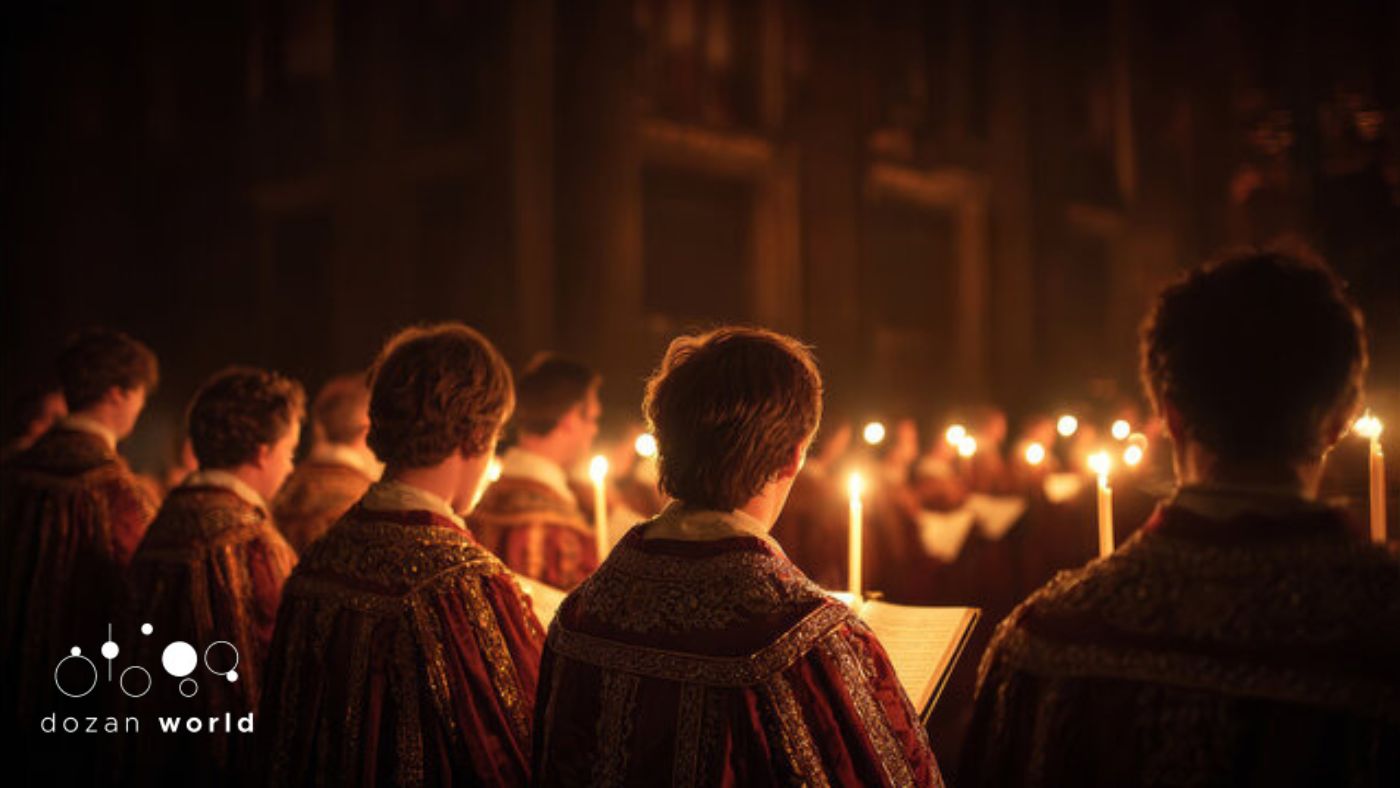
There is something powerful and unique about sacred choral music. The universal expression of devotion, spirituality, and community brings people closer. While people often tie them to a faith or belief system, they break down those barriers and touch the hearts and souls of every listener. Whether performed in places of worship, concert halls, or cultural festivals, sacred music has a distinctive storytelling character and passes traditions from one generation to the next. If you are part of a choir that wants to expand its repertoire beyond European composers, it is time for you to consider sacred choral music from the Middle East.
Middle Eastern sacred choral music has a rich history. The region's oral traditions date back centuries, which isn’t surprising given that it is one of the original cradles of civilization and has birthed three major religions. Exploring the rich musical heritage of this region allows your choir to expand its repertoire, not only musically but culturally and spiritually. If you thought accessing sacred choral music from this part of the world was a challenge, at Dozan World, we are here to help you and to let these ancient voices inspire your modern choir.
We are on a mission to preserve and present sacred vocal music from across the Middle East. With our steadfast efforts, we are preserving the region's rich cultural heritage and preventing it from being lost to time. We have focused on honoring traditions while blending them with modernity to introduce our audience to the enduring power of the Middle East’s sacred choral music. We are helping choirs around the world to experience sounds deeply rooted in ancient faith traditions and cultural identity. For any ensemble seeking fresh, meaningful music for worship services or concerts, we are opening the door to a powerful new chapter in choral performance.
Sacred music has a unique place in choral art because it does more than entertain; it uplifts the spirits of performers and listeners alike. It touches the innermost emotions, whether you are performing in a concert hall or at a religious gathering. Middle Eastern sacred choral music is deeply meaningful because it carries generations of spiritual expression, history, and cultural identity within every phrase. We have curated a collection rooted in ancient worship traditions and community rituals. The melodies and texts reflect the experiences, faith, and hopes of people who have lived in this region for thousands of years through times of happiness, struggle, grief, and triumph.
As your choir starts practicing sacred choral music from this region, the first thing you will notice is the unique, highly expressive modal system known as maqamat. As you perform, you will express emotions that feel raw, intimate, and deeply human. Put your heart into the performance, and it won’t be just another choral piece, it will be your connection to a rich heritage that has survived adversity.
Middle Eastern sacred music was historically transmitted orally within families and community traditions, preserving an unbroken authenticity for centuries. We present this legacy in its authentic form, collaborating with passionate composers and arrangers who tailor these works specifically to meet the needs of Western-trained choirs.
Sacred choral music goes by several names depending on the tradition and setting. In Western concert programs, it is often labeled liturgical music, church music, or spiritual choral music. Within specific traditions, it takes more precise forms: the Mass and Requiem in Catholic liturgy, the motet as a shorter Latin setting for trained voices, the oratorio as a large scale narrative work for choir and orchestra, and the anthem in Anglican and Protestant worship. In the Middle East, sacred vocal music carries its own vocabulary rooted in maqam, the modal system that shapes melody and ornamentation, and in devotional forms tied to Christian, Islamic, and Druze worship across the region. Whatever the label, the purpose stays the same: choral voices carrying text that reaches toward the divine.
Choir directors building a repertoire for worship or concert programs often start with a handful of canonical works before branching into lesser-known traditions. Here are five compositions that show the range of sacred choral music across centuries and regions:
Middle Eastern sacred choral music belongs in this exact same conversation. Dr. Shireen Abu Khader, Dozan World's founder, holds a PhD in Music Education from the University of Toronto and a Master's in Choral Music from the University of Southern California, and has spent decades bridging these two worlds for choirs across the globe. Pieces built on maqamat such as Bayati, Rast, and Hijaz carry the same devotional weight as the works above, expressed through microtonal ornamentation and modal color rather than functional harmony. Placing a piece like Haddathani Qalbi or Mawlaya Salli from our collection alongside Handel or Fauré gives audiences a fuller picture of what sacred choral music can sound like.
Today, most choir groups are exploring music beyond their local vicinity. With digital global connections, keeping an eye on an international repertoire is essential. Sacred choral music from the Middle East opens a fresh chapter for your choir. Not only will you have something unique to offer your traditional audience, but you will also make inroads into uncharted artistic territories.
Middle Eastern choral music enhances your ensemble's range, especially in rhythmic nuance and modal tuning. We build collections with clear notation, transliterations, and voice-leading to help you easily overcome linguistic barriers. Our catalog is flexible and suitable for all types of ensembles, including SSA, SATB, and SAB voicings. If you are looking for inspiration, here are 10 sacred choral pieces from our catalog to explore:
Choirs and listeners often ask which choral work stands as the most beautiful. There is no single answer, since beauty in choral music comes from how well harmony, text, and the human voice serve the same emotional truth. Listeners frequently point to Allegri's Miserere, Fauré's Requiem, and Rachmaninoff's All-Night Vigil as classic examples for the way they combine restraint with emotional depth. Middle Eastern sacred choral music earns a place in that same conversation for a different reason: the microtones and ornamentation of maqam create intervals and colors a Western-trained ear rarely encounters, making the music feel newly moving to modern audiences. Beauty, in the end, is less about naming a single best piece and more about a choir finding the work that lets its voices tell a true story.
Celebrate the world's cultural diversity by performing music from our Sacred Choral collection. To explore our growing catalog, visit the Vocal Sacred section at Dozan World.
Is Middle Eastern sacred music hard for Western choirs to learn?
Not at all. While the modal scales may feel new at first, our sheet music includes clear Western notation, IPA pronunciation guides, and audio tracks to make preparation smooth and accessible for singers.
Can this repertoire be performed in non-religious concert settings?
Yes. While these pieces carry deep spiritual roots, they are ideal for secular concert halls, multicultural programs, academic symposiums, and festival showcases.
Do we need language training to sing this music?
We provide you with pronunciation support and translations, making preparation smooth and educational.
What vocal skill levels and voicings are available?
Our catalog spans intermediate to advanced arrangements. We also provide accessible voicings (such as SAB and SSA) alongside full SATB options to suit ensembles of all sizes and experience levels.
Do audiences connect with Middle Eastern sacred music?
Resoundingly yes. The universal themes of peace, devotion, hope, and humanity transcend language barriers and resonate deeply with diverse audiences worldwide.
What is sacred choral music called?
Depending on the tradition, it is called liturgical music, church music, or sacred vocal music, or by its specific form: Mass, motet, oratorio, anthem, or in the Middle Eastern tradition, maqam based devotional music.
Can you give five examples of sacred music?
Gregorian chant, Handel's Messiah, Bach's Mass in B Minor, Allegri's Miserere, and Fauré's Requiem are five widely performed examples, alongside Middle Eastern maqam based works such as Haddathani Qalbi and Mawlaya Salli.
What is considered the most beautiful choral music?
This depends on the listener, but Allegri's Miserere, Fauré's Requiem, and Rachmaninoff's All Night Vigil are commonly named among the most beautiful in the Western canon, while Middle Eastern sacred choral pieces are gaining recognition for their emotionally rich modal ornamentation.
What are some examples of sacred choral compositions?
Beyond the Mass, motet, and oratorio traditions of the West, sacred choral compositions include Middle Eastern works such as Ayyuha Samuhu, Laylat al-Milad, and Wa Habibi from Dozan World's Vocal Sacred collection.